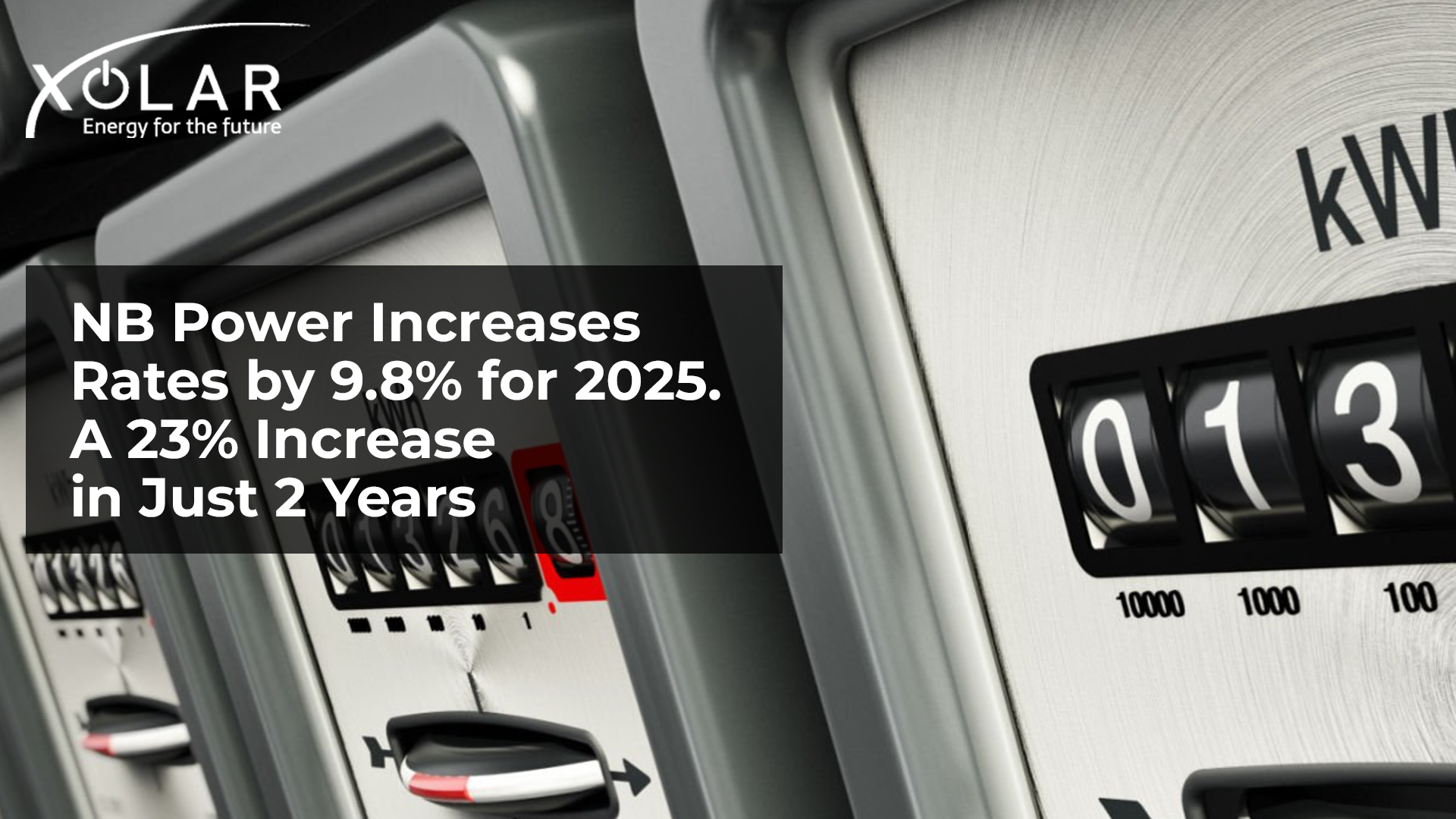
NB Power Increases Rates by 9.8% for 2025. A 23% Increase
By Chris Ogilvie
The Legal Battle Over New Brunswick Energy Prices
If you’ve kept up with our blogs, you’re well aware of the battle taking place over energy rates in New Brunswick. We wrote a blog about how the Auditor General said NB Power may not be able to sustain operations if their fiscal struggles continue in early 2024. NB Power started pursuing an aggressive 9.25% rate increase to go into effect April of 2024.
In our article about the since discontinued rebate program, we touched on variance accounts which NB Power set up to be able to increase energy rates at any time based on unforeseen events that may affect the price of power.
This legal battle intensified in 2024 where lawyers against the rate hikes argued that NB Power failed meet its debt reduction targets for the whole last decade because of their inability to control costs – which we covered here.
Despite an overwhelming opposition to sizable rate hikes, NB Power eventually won in courts to increase rates by 9.25% in 2024 – which actually ended up being 13.2% because of the aforementioned variance accounts. NB Power cited power facility issues that justified them increasing rates from the normal 9.25% to 13.2% using the variance accounts. We covered that rate increase here. Utility consultant Dustin Madsen argued against the rate hikes, saying they were both unnecessary and against the public interest.
Since the 2024 increase, these legal battles have continued as NB Power has been pushing for another rate increase of 9.8% to take effect in April 2025. Despite an overwhelming opposition once again to the rate hikes, the 9.8% rate increase for 2025 was recently approved by the New Brunswick Energy and Utilities Board (EUB) in a landmark decision. Once this hike goes into effect in April 2025 New Brunswick residents will have seen their power rates increase by 23% in just two years.
Once again, that rate hike is just the potential floor price customer will pay. If NB Power can cite unforeseen issues that cause losses, they can use variance accounts to increase rates further in 2025.
Bringing Clarity to the Rate Hikes
N.B. Power’s rate increase request, initially proposed late last year, has been almost fully approved by the EUB. Here’s what it entails:
- April 2024: The first rate hike of 9.25% was implemented earlier this year, retroactively approved by the board. Residential customers saw an average increase of 9.8%, that was further pushed to 13.2% due to unforeseen losses by NB Power.
- April 2025: A second 9.25% increase will take effect, slightly modified to reflect a marginal adjustment in calculations.
EUB board member Christopher Stewart, who led the review hearings, emphasized the expedited nature of the ruling to provide clarity for customers and allow N.B. Power to plan its operations effectively. Detailed written reasons for the decision will follow.
Adjustments to Rate Structure
While the overall rate hike was approved, two notable exceptions stood out:
- Service Charge Categories:
- N.B. Power proposed unifying rural, urban, and seasonal residential monthly service charges into a single category.
- The EUB rejected this, maintaining separate charges for each category.
- As a result:
- Rural and seasonal customers will see their $28.27 monthly charge increase by $1.33.
- Urban customers’ service charges will decrease by $1.29.
Future hearings will revisit this unification proposal, which is one of the only things to finalize since the 9.8% increase has already been approved. It’s also important to note that for residential customers this is the lowest impact of the rate increase, only amounting to about 0.5-1% of additional price increases depending on how much you pay for power.
- Point Lepreau Nuclear Generating Station Performance:
- The EUB approved 3.7 fewer “forced loss” days (equipment breakdown days) than N.B. Power had budgeted for at the Point Lepreau station.
- This adjustment slightly reduces the second-year rate hike, though the impact is minimal and may only induce a change of a few tenths of a percent.
The Point Lepreau outage is one of the power facilities that experienced an outage in 2024, which NB Power used to increase 2024 rates as discussed earlier.
Backlash from Industry
Not everyone is on board with the ruling. J.D. Irving Ltd., N.B. Power’s largest private-sector customer, voiced strong opposition.
“Current electricity rates have a massive impact on Irving Paper’s ability to compete,” the company stated, expressing disappointment in the EUB’s decision to approve nearly all of N.B. Power’s $320-million request.
The forestry giant’s reaction underscores the strain these rate hikes may place on large-scale industrial operations, especially in energy-intensive sectors.
What’s Next for N.B. Power?
This rate increase highlights the financial challenges facing N.B. Power, as well as its efforts to balance operational needs with customer impacts. With additional rate design hearings planned and mounting pressure from stakeholders, the utility’s future rate strategies will remain under scrutiny.
For now, the approved increases ensure N.B. Power has the resources to stabilize operations and plan for long-term energy demands—but not without raising questions about their ability to manage costs and debt, affordability of power, and competitiveness across New Brunswick.
Impact on Residential Customers
New Brunswick public intervener Alain Chiasson hired Dustin Madsen as one of the experts to review the rate increases, and they were attempting to build a case for the Energy and Utilities Board to have it reduced. Dylan Madsen is an account and former utility executive who has been working as a utility consultant for NB. Unfortunately, their efforts failed to curtail the rate hikes for 2024 and 2025, as both of them has now passed.
Residential customers should prepare for the second increase in April 2025, but some relief may be on the horizon. Premier Susan Holt has promised to explore eliminating the province’s 10% sales tax on residential electricity bills—a potential offset to the rate increase. We’ll keep you updated if we see that the movement on removing the residential electricity bill sales tax makes significant ground.
The Only Way to Avoid Rate Hikes is to Go Solar
Solar is sized and based on your electricity usage, making it the only real way to combat rising costs which charge you more for the exact same energy usage you had before the rate hike.
While the upfront investment in solar may seem significant at first, the cost per kilowatt- hour (kWh) of solar energy is much lower than what your power company charges. Your solar setup’s costs of kWh can be compared to current costs per kWh of energy in your area, but energy costs always increase over the long term due to inflation – or mismanagement of debt and costs as is the case with NB Power. This is why going solar is basically locking in your energy costs for the next 30 to 40 years.
So how much can solar save you over 30 years• Let’s use an example.
Let’s say your average monthly electricity bill is $250. Your bill in 25 years would be $523 dollars if there was a modest 3% rate increase yearly over that span. That would mean the 25 year cost of not going solar would be $115,659. If you went solar, you would have over $100,000 more money in your pocket that would have otherwise been spent on power bills.
Thats with a modest 3% increase per year over 25 years. We just witnessed NB Power raise rates by 23% in just 2 years, so realistically NB is one of the best places in the world for solar with how power costs are rising and will continue to rise because of inflation or further issues with NB Power managing their debts.
If you want to learn more about how much solar can actually save you check out our blog post on the topic.
Avoid Future Rate Hikes by Going Solar
When you do the math over the 30- to 40-year lifespan of a solar system, it becomes clear that solar energy offers a much lower cost per kWh than what the power company charges even at current year rates. With these rates only expected to go up, you are taking a bigger risk by not going solar.
Our Solar Specialists and Project Managers can cleanly walk you through the steps of what is required and make sure you maximize the value of any provincial or federal programs in your area. We’ll also get you started on the vital first step of acquiring a tailor-made solar proposal for your residential project’s energy needs.
Schedule a consultation for our solar specialist’s expert guidance here.
To read more about the NB Power rate hike check out the CBC article.
XOLAR INC.
Xolar is a full service turn-key platform for transitioning both residential and commercial clients, book a free quote today!
Recent Posts
Follow Us
Monthly Testimonial
Facebook
Youtube
Instagram
Linkedin
On Key