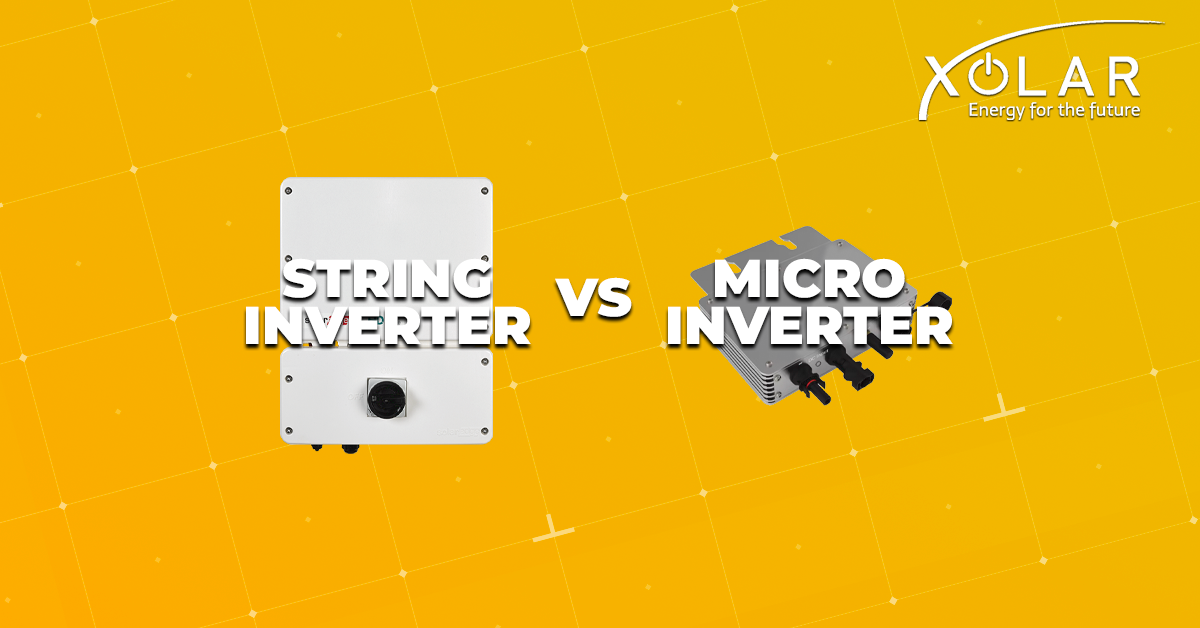
String vs Micro Inverters: Which is better for your home?
By Chris Ogilvie
What is a solar inverter?
When it comes to installing solar for your home, it’s important to select a provider that uses high quality panels, but the next most important component in your system is your solar inverter. There are two types of solar inverters: the string inverter and the micro- inverter. But what exactly is a string inverter, and how does it compare to micro inverters• We’ll break down both types of inverters below and go over why a string inverter is the best option for residential solar systems.
Solar panels generate direct current (DC) electricity from sunlight. However, most homes and appliances use alternating current (AC) electricity. The inverter’s job is to convert the DC electricity produced by the solar panels into usable AC electricity for your home.
What is a String Inverter?
A string inverter is a central inverter that connects a series (or “string”) of solar panels together. All the DC electricity generated by the connected panels is sent to a single inverter, where it is converted into AC electricity.
How String Inverters Work:
- Panel Connection: Solar panels are connected in series, forming a “string.”
Multiple strings can be connected to a single string inverter. Essentially your entire
solar installation would be connected to the one string inverter. - Centralized Conversion: The DC electricity from the entire string is fed into the
string inverter, which converts it to AC electricity. AC electricity is the type of
electricity that is usable by your home and the grid. - Power Distribution: The converted AC electricity is then distributed to your home
for use, with any excess potentially being sent back to the grid through net metering.
What is a Micro Inverter?
A micro inverter is a small inverter installed directly on each individual solar panel. Instead of a single inverter handling the conversion for multiple panels, each panel has its own dedicated micro inverter that converts the DC electricity to AC right at the source.
How Micro Inverters Work:
- Panel-Level Conversion: Each solar panel has its own micro inverter attached to it.
The DC electricity generated by each panel is converted to AC immediately by its
respective micro inverter. - Independent Operation: Since each panel operates independently, shading, dirt,
or damage to one panel doesn’t significantly affect the output of the others. - Power Distribution: The AC electricity from each panel is then combined and sent
to your home for use, just like with a string inverter system.
Comparing String Inverters and Micro Inverters
While both string inverters and micro inverters serve the same basic function, converting DC to AC electricity, they do so in different ways, with distinct advantages and disadvantages.
Advantages of String Inverters:
- Cost-Effective: String inverters are generally more affordable than micro inverters,
both in terms of initial cost and long-term maintenance. This makes them a more
cost-effective solution for most home solar installations. - Proven Reliability: String inverters have been used for decades in solar
installations and have a proven track record of reliability. They are robust and
durable, making them a dependable choice for homeowners. For example, in a 20
panel home solar system, micro-inverters have a 2% failure rate each year where
one might need to be replaced. String inverters are much more suitable for home
solar systems because they are more durable and reliable than micro-inverters. - Simpler Installation and Maintenance: Since only one string inverter is needed for
an entire solar system, installation is simpler and often quicker than with micro
inverters, which require individual installation on each panel. Also, because string
inverters are much more durable than micro-inverters, your solar system with a
string inverter has next to no maintenance. - Efficient in Unshaded Areas: If your roof is free from shading and your panels are
installed at the same angle and orientation, a string inverter system will operate
efficiently, maximizing the energy production from your solar panels.
Advantages of Micro Inverters:
- Panel-Level Optimization: Micro inverters optimize the performance of each individual panel. This means that the panels may operate more efficiently, but this level of optimization is only needed on large scale commercial systems. With a smaller home solar system, the added benefit of micro-inverters doesn’t outweigh the added maintenance of replacing each individual inverter when it fails. Micro- inverters are more suitable for commercial systems that may have hundreds of panels.
- Scalability: If you plan to expand your solar system in the future, adding more panels is easier with micro inverters since each new panel simply gets its own inverter.
- Increased Monitoring Capabilities: Micro inverters often come with panel-level monitoring, allowing you to see the performance of each individual panel. This can help identify issues more quickly. This is important for micro-inverter based systems since an individual inverter may fail and need replacing in this setup.
Why String Inverters Are Often Better for Home Solar Installations
String inverters are the better choice for home solar installations. The lower cost of string inverters makes them a more budget-friendly option, allowing homeowners to invest in higher-quality panels or other system enhancements. With fewer components to install and maintain, string inverters simplify the installation process and reduce the likelihood of failure. This results in a system that is easier to manage and more reliable over the long term. A homeowner wouldn’t want a system that requires they monitor the panel efficiency often and have to schedule replacements for parts.
If your roof is unshaded and your panels are installed uniformly, a string inverter system will also deliver excellent performance without the added cost of micro inverters. With only one inverter to monitor, maintenance is straightforward and constant monitoring isn’t required.. In the event of a rare string inverter failure, repairs are simpler and less expensive than dealing with multiple micro inverters.
Get the right system for your home with XOLAR
If you’re looking to do a commercial project, then micro inverters might be an option you choose. Even in the event of a commercial install, you may choose to go with multiple string inverters to simply your maintenance.
A homeowner looking to install solar for their personal energy needs would want to choose a string inverter. Not only does it cost you less, but its more reliable and durable than micro-inverters. The goal of solar is to fully cover your electricity bills without you having to add another worry to your life about something that needs to be managed. This is why string inverters are the best choice for your personal home solar system.
If you’re looking to go solar, our Solar Specialists and Project Managers can cleanly walk you through what type of system is needed to cover your energy needs and make sure you maximize the value of any government programs in your area. We’ll also get you started on the vital first step of acquiring a tailor-made solar proposal for your personal energy needs at home.
Schedule a consultation for our solar specialist’s expert guidance here.
XOLAR INC.
Xolar is a full service turn-key platform for transitioning both residential and commercial clients, book a free quote today!
Recent Posts
Follow Us
Monthly Testimonial
Facebook
Youtube
Instagram
Linkedin
On Key